








Firefighter Requirements and Job Data
Although firefighter education requirements do not include an undergraduate degree, firefighters are expected to have rigorous training in order to fulfill their duties, and other certifications and degrees are available. Firefighter training most often comes in the form of on-the-job training, which includes intense physical exercises and learning firefighting strategies. Most firefighters also obtain certification as emergency medical technicians (EMTs), and degrees in fire science can also help advance a firefighter's career.
| Required Education | High school education or the equivalent |
| Other Requirements | Fire training academy; on-the-job training; EMT certification is common |
| Projected Job Growth (2016-2026)* | 7% |
| Median Salary (2018)* | $49,620 |
Source: *U.S. Bureau of Labor Statistics (BLS)
How to Become a Firefighter
A career as a firefighter requires no more than a high school diploma, and an EMT certification is usually expected as well. Candidates must complete intensive on-the-job training programs that include education as well as physical training. Those choosing a career in firefighting may be able to enter an apprentice program with a fire department that often leads to an offer of a firefighting position. Many firefighters also go on to earn degrees in fire science in order to advance in their careers, but this is not a prerequisite for becoming a firefighter.
Firefighter Education Requirements and Training
What degree do you need to be a firefighter? Only a high school degree or a GED is expected in terms of formal education. However, although the minimum level of firefighter education needed is not high, further education may lead to increased employment opportunities and career advancement, particularly because of high competition for some job openings. Regardless of an individual's educational experience, a firefighter's training primarily takes place on the job. Applicants are expected to pass written, physical and medical examinations before being considered for a job opening.
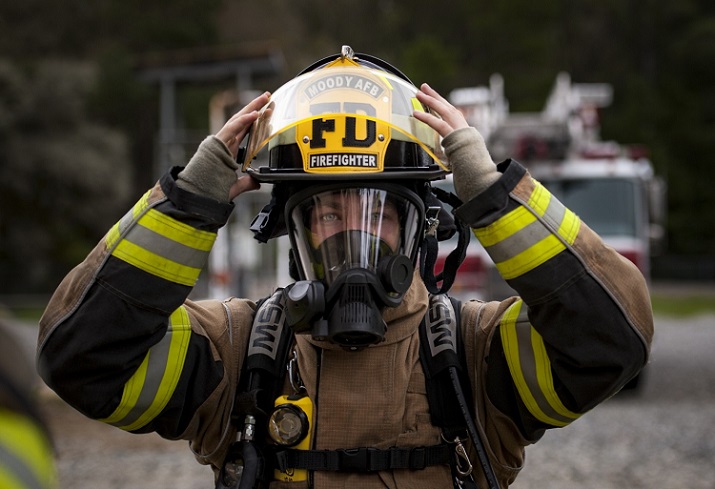
Once they are hired, new recruits participate in vigorous physical training exercises before they are permitted to enter the field. Nearly all firefighters in the United States must be certified as emergency medical technicians (EMTs) before being allowed in the field. This training can take up to one year to complete and also results in EMT-Basic certification.
 |
It is also important that a firefighter has a valid driver's license and a good personal history, which includes the absence of convictions, a decent credit history, and no controversial material on social media.
Firefighter Advanced Educational Options
Certificate or Degree in Fire Science
Associate's degrees, bachelor's degrees and certificates in fire science are widely available at vocational colleges and 4-year universities. Many of these programs are administered by fire academies, which are associated with both a school and the local fire department.
Students in a fire science program study various fire investigation methods as well as techniques for controlling a fire with equipment, like axes, fire extinguishers, ladders and chainsaws. These programs also typically include instruction in fire prevention and teaching fire safety to the public. Additionally, fire science students are taught basic first aid, CPR and proper handling of hazardous materials.
Firefighter Apprenticeship
Accredited apprenticeships are offered by fire departments, and programs often require students to enroll in a fire science degree program at an affiliated school. These programs take about 4 years to complete and involve extensive practical training in the field.
Students in apprenticeship programs have the opportunity to gain paid experience in a fire department, operating equipment and responding to calls. Fire departments that offer apprenticeship programs typically hire candidates who have completed an apprenticeship for firefighting positions.