
Essential Information for a Master's in Philosophy Online
Philosophy degree programs are rarely offered in an online format, but students may be able to study philosophy through online master's degree programs in similar subjects, like consciousness studies, integrative liberal studies, theological studies or philosophy and religion.
 |
Online Philosophy Master's Degree
Online philosophy master's degrees are uncommon, but students can pursue related degrees in philosophy and religion. Some online programs require students to simultaneously study an additional major. Students in such programs explore historic and modern texts that discuss human existence, morality and thinking processes. While obtaining online graduate degrees in philosophy, students concentrate on critically analyzing, researching and writing about philosophical traditions and concepts.
Information and Requirements
Master's in philosophy online programs take two years to complete and culminate in a thesis paper on a subject of the student's choice. Coursework is delivered completely online, but thesis papers must be defended in person before a professorial committee. Thesis research must be conducted in-person at academic libraries. Online course delivery can take a variety of forms, including individual courses, online seminars and online group courses. Like campus-based philosophy programs, most online programs rely heavily on group interaction and discussion; this typically takes place via online discussion forums.
Online Schools
Holy Apostles and Biola University offers a MA in philosophy. Auburn University and Rutgers University offer a Master of Liberal Arts degree.
Common Philosophy Courses
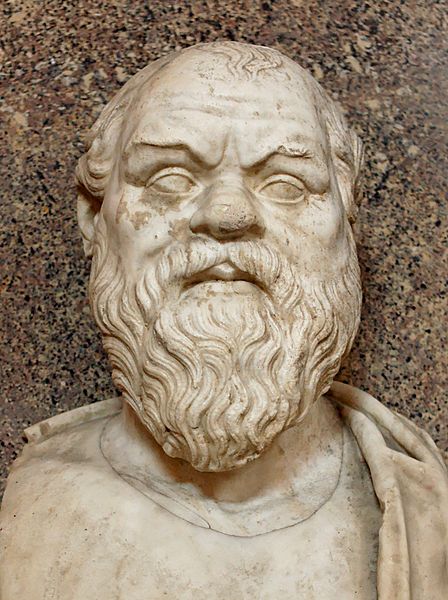
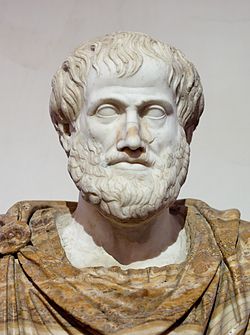
Aside from writing a thesis paper, most graduate-level philosophy programs allow students a great deal of latitude in the courses taken to fulfill credit hour requirements. Almost uniformly, programs offer one course covering Greek philosophers and another course investigating ancient philosophy. In a Greek philosophy course, students explore the teachings and writings of Socrates, Plato and Aristotle. Ancient philosophy courses include the works of Aristotle, Plato and Aquinas.
 |
Moral Theories
Students in this course focus on topics such as impartiality, values, motives and social obligations. Some programs discuss the moral foundations of political structures and theories. Questions covered in this course include whether morality can be taught and whether there can ever be a universal moral code.
Enlightenment
This course focuses on 18th-century European philosophers such as Kant, Voltaire, Hume and Rousseau and their impact on the formation of modern philosophical thought. Development of the concepts of equality and freedom in literature and arts are discussed.
Religious Myth and Society
Students in this course investigate the myths behind world religious sects, such as Judaism, Christianity, Buddhism and Islam. The foundation, evolution and modern interpretations of different myths are included in the analysis, as is the relationship of religion to modern science and social codes. Depending on the program, this topic can be divided into several different courses.
Political Theory
This course discusses the multiple political ideologies, theories and foundations for political structures in different cultures. The American political structure, including right- and left-wing perspectives, is incorporated into the curriculum. Liberalism and individual and cooperate government theories are discussed.
Career Information for a Master's Degree in Philosophy
A master's degree in philosophy, online or otherwise, can lead to employment as a college professor. Most universities prefer to hire professors holding doctoral degrees, but colleges without graduate programs, community colleges or smaller universities may be willing to hire graduates of master's programs. In 2018, the U.S. Bureau of Labor Statistics (BLS) noted that philosophy and religion professors earned an average salary of $82,420 (www.bls.gov). A philosophy master's degree can also lead to a career as a religious leader in a religious institution, government organization or hospital. In 2018, members of the clergy earned an average yearly salary of $53,290, according to the BLS.
Continuing Your Education: JD and Ph.D. Philosophy Programs
Philosophy is closely related to law, and students with master's degrees in philosophy can also choose to pursue a Juris Doctorate (J.D.) and become an attorney. To work as an attorney, a student must complete three years of law school and subsequently pass a state bar examination to become licensed. Juris Doctorate programs are not offered online.
A student may also continue his or her studies to earn a Doctor of Philosophy (Ph.D.) in Philosophy or in Classical Philosophy. Some programs allow a student to simultaneously earn a J.D. and a Ph.D. in Philosophy. Each of these programs typically requires no less than three years of study and students must complete a thesis paper. Students must pass oral examinations and defend their dissertations to graduate with a Ph.D., and they must pass a bar examination to work as an attorney. Ph.D. programs in philosophy, whether or not they're combined with a J.D. program, are not available online.
Online philosophy master's degree programs or related subjects allow students to explore the history of philosophy and religion, as well as their effects on modern issues, such as American politics. Through online communications technology, students can engage in class discussions about these topics with fellow students. Masters degree in philosophy online programs can afford a person an opportunity to study graduate level work while taking other classes.