
High Paying Biology Jobs
How much do biologists make? Well, for those individuals interested in a career involving biology, there are a number of options available that offer salaries that are much higher than the median salary across all occupations. Whether a biology major is interested in pursuing a career that involves medicine, research, or wildlife, they should be able to find a job in their field of interest that pays well. Let's look at some different career possibilities, including the highest paying biochemistry jobs and other high paying jobs with biology degree credentials. The table below shows some careers with a biology degree as well as biology major salary information.
| Job Title | Median Salary (2019)* | Job Growth (2019-2029)* |
|---|---|---|
| Biochemist/Biophysicist | $94,490 | 4% |
| Epidemiologist | $70,990 | 5% |
| Forensic Scientist | $59,150 | 14% |
| Health Communications Specialist | $46,910 | 13% |
| Medical Scientist | $88,790 | 6% |
| Microbiologist | $75,650 | 3% |
| Occupational Health and Safety Specialist | $70,480 | 4% |
| Pharmaceutical Sales Representative | $81,020 | 2% |
| Registered Nurse | $73,300 | 7% |
| Wildlife Biologist | $63,270 | 4% |
Source: *U.S. Bureau of Labor Statistics
Best Paying Biology Careers: Examples
Biochemist/Biophysicist
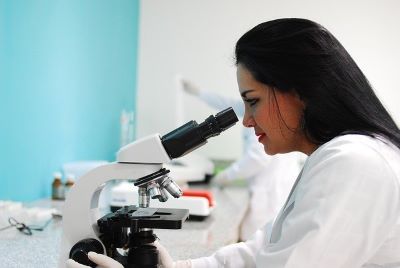 |
As a biochemist or biophysicist, you will combine the study of biology and either chemistry or physics to better understand various biological processes. For example, a biochemist may be involved in research to understand how different plants and animals have evolved over time, or how we pass along genes from generation to generation. As a biophysicist, you may focus on figuring out better ways to engineer crops to produce more at harvest. The median wage for these professionals in 2019 was $94,490, though there is the possibility for higher wages depending on the specific industry. To become a biochemist or biophysicist, you will need a Ph.D. if you want a career in research. Individuals with a bachelor's or master's degree may qualify for entry-level work.
Epidemiologist
As a type of public health professional, epidemiologists are experts in studying diseases that affect humans. There are various specialties in epidemiology, from maternal and child health to environmental health and many more in between. Epidemiologists who focus on infectious disease will likely need a solid background in biology, as they may be involved in collected biologic samples and bodily fluids and analyzing them using microbiologic methods. Depending on your employer and the field you work in, you have the opportunity to make a range of salaries as an epidemiologist. Those who worked in research and development made a median salary of $99,770 in 2019, while the median wage for all epidemiologists was $70,990. To become an epidemiologist, you will need at least a master's degree in the field, though some professionals also pursue a doctoral level degree in medicine or epidemiology.
Forensic Scientist
A forensic scientist uses biological and scientific approaches to analyze data obtained from a crime scene. They may perform DNA analysis, fingerprint analysis, chemical composition analysis of substances obtained at a crime scene, and other tests. Their ultimate goal is to provide evidence that can be used in a court of law to determine who committed a crime, as well as more details about the way in which a crime is committed. The laboratory techniques used in forensic science require biology experience, and many forensic scientists majored in biology in college. According to the U.S. Bureau of Labor Statistics, forensic scientists earned a median annual salary of $59,150 as of May 2019.
Health Communication Specialist
Health communication specialists are healthcare professionals who work with state, local, and federal governments to provide information to the public and encourage public health initiatives. They may spread information about infectious or chronic diseases as well as provide resources to promote positive health behaviors and access to affordable healthcare. Although the median salary for health communications specialists in 2019 was $46,910, those working in hospitals earned $64,680, and individuals working for the CDC earned an even higher salary of $93,130.
Medical Scientist
Medical scientists are involved in a wide variety of projects and tasks, depending on the specific field they work in. For example, cancer researchers focus on better understanding the causes of cancer and possible ways to cure it. Serologists are experts in analyzing bodily fluids, like blood and saliva. As a toxicologist, you would work to understand how various chemicals and drugs affect the human body. Regardless of the specific type of medical scientist you are interested in becoming, your job will likely involve biology in some way, as all medical scientists are involved in some aspect of human health. Medical scientists in 2019 made a median salary of $88,790, though those who worked in pharmaceutical and medicine manufacturing made $111,630. To become a medical scientist, you will need either a Ph.D. in biology or a related science field, or a medical degree.
Microbiologist
Microbiologists are experts in studying microorganisms. These may include bacteria, fungi, parasites, and viruses. The majority of microbiologists work in research and development, though a large number of them also work in the pharmaceutical industry. More often than not, they work in laboratories where they conduct their experiments and analyze the results. These professionals need to be able to operate sophisticated lab equipment, like microscopes and advanced computer software, in order to effectively do their job. While the median wage for microbiologists in 2019 was $75,650, those who worked in the federal government earned a median salary of $106,670. To become a microbiologist, you will need at least a bachelor's degree in the field for entry-level work.
Occupational Health and Safety Specialist
Occupational health and safety specialists work for a variety of institutions, such as production factories, office buildings, hospitals, universities, and government organizations. The goal of their work is to collect data on employee health and analyze it to assess the safety of working environments and protocols. Their work can inform changes in company policy that promote the health and wellbeing of employees. According to the U.S. Bureau of Labor Statistics, the median annual salary for occupational health and safety specialists as of May 2019 was $70,480 per year, and specialists working in the manufacturing industry earned $74,820 on average. The analysis of healthcare data associated with this career is directly related to information you'll learn as a biology major.
Pharmaceutical Sales Representative
Pharmaceutical sales representatives work for companies that manufacture, sell, and distribute medications. They often travel to hospitals and doctor's offices in order to speak with medical professionals and promote the pharmaceutical products offered by their company. Because these representatives need to become experts on the drugs that their company sells and the ways in which those medications work, it is helpful for pharmaceutical sales representatives to have experience studying biology. According to the U.S. Bureau of Labor Statistics, pharmaceutical sales representatives earned a median annual salary of $81,020 as of 2019.
Registered Nurse
 |
Registered nurses are healthcare professionals that often work in hospitals and clinics. They regularly interact with patients, providing care by administering medications, monitoring vital signs, and helping patients with tasks like bathing and accessing the bathroom. Registered nurses also interact with doctors who are caring for the patient. In addition to a bachelor's degree in biology or a related field, nurses need to study nursing and pass a certification exam in order to be eligible for this career. According to the BLS, registered nurses earned a median annual salary of $73,300 in 2019.
Wildlife Biologist
As a wildlife biologist, you will be responsible for conducting research on various natural settings and the animals that live within those settings. You may focus on a particular aspect of wildlife, like botany or ecology, so your specific job duties would likely vary depending on your chosen area of study. As a researcher, you may spend much of your time in the field. Some wildlife biologists may present their research at academic meetings or publish it in academic journals. In 2019, the median wage for wildlife biologists was $63,270 annually, which is roughly $20,000 more than the median wage for all jobs. To become a wildlife biologist, you will usually need at least a bachelor's degree, though some more advanced research-oriented positions will require a master's or Ph.D.